In a world where governments can create money out of thin air and the dollar loses value every year, those ancient lessons carry a modern urgency.
Gold and Silver: God’s Symbols of Enduring Value
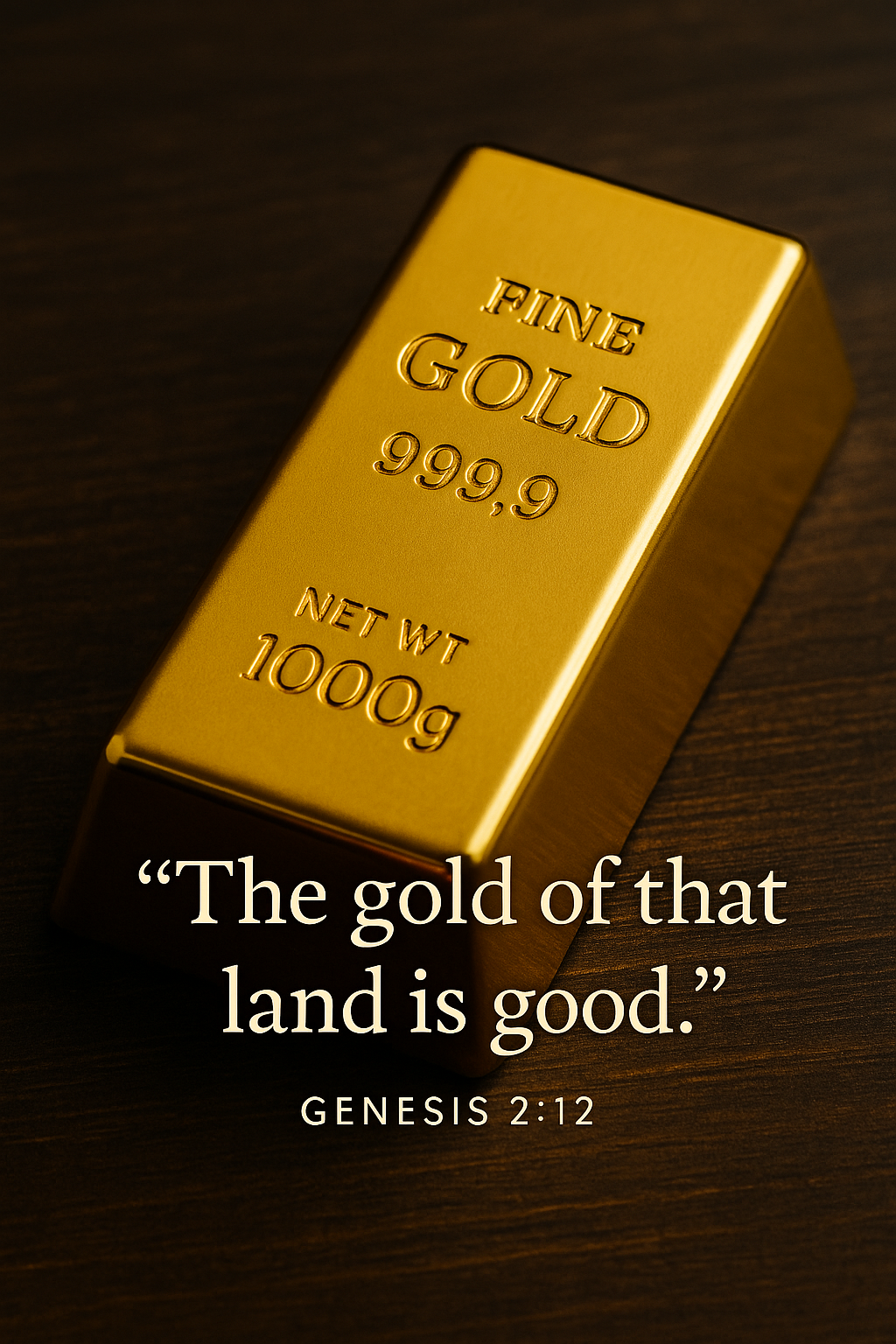
The first time gold appears in the Bible, it is described simply and powerfully:
“The gold of that land is good.” (Genesis 2:12)
Before nations, before currencies, before economies, Scripture identifies gold as inherently good. Not because it was used as money, but because its qualities reflect something about God’s nature: pure, unchanging, incorruptible.
Silver appears throughout Scripture as the metal of redemption and honest exchange. It was used to settle debts, redeem property, and measure value in a way that required integrity.
Together, gold and silver form the Bible’s foundational language of value. When Scripture wants to speak about truth, purity, and lasting worth, it chooses these metals intentionally.
Why God Chose Precious Metals for Worship
When God instructed Moses to build the Tabernacle, He was specific:
- Gold covered the Ark, lampstands, and sacred furnishings
- Silver formed the bases and structural supports
Gold and silver were chosen because they do not corrode, do not decay, and do not lose their integrity over time. God used what was permanent to represent His presence among the people.
There is a clear lesson here. When something must endure, gold and silver are the standard. That truth has not changed.
Gold Is Not the Problem. Idolatry Is.
Some biblical passages warn about “golden idols,” but the issue was never the metal itself. The danger was placing trust in wealth instead of in God.
Gold is morally neutral. Your heart determines how you use it.
Scripture’s warnings are about idolatry, not ownership. The Bible consistently frames wealth as a blessing that should be earned honestly, stewarded wisely, and used for good purpose.
Gold is a tool of stewardship, not a spiritual threat.
The Refining Fire: Why Scripture Uses Gold as a Metaphor
Scripture compares spiritual growth to the refining of gold:
“I will refine them like silver.” (Zechariah 13:9)
“The testing of your faith, more precious than gold.” (1 Peter 1:7)
Why gold Instead of crops, stones, or livestock
Because gold remains gold under pressure. Fire does not destroy it; fire purifies it.
Gold is rare.
Gold is incorruptible.
Gold becomes stronger through testing.
The Bible uses gold as a metaphor because it is the ultimate symbol of real value under real pressure. The same principle applies to financial life today.
A Biblical Approach to Wealth in Modern Times
When we look at the economic challenges facing America today, the biblical worldview feels surprisingly modern:
- Inflation erodes the dollar
- Debt burdens nations and households
- Currency debasement destroys purchasing power
- Uncertainty creates anxiety
Gold and silver stand in contrast to this instability.
The same qualities that made them ideal for the Tabernacle make them ideal for today’s economic climate: permanence, scarcity, resilience, and integrity.
Here is how biblical principles align with modern financial reality:
Biblical Principle Modern Financial Reality
Gold represents permanenceThe dollar loses purchasing power every yearSilver symbolizes redemption and honest measureFiat currency can be manipulated at willRefinement produces purityEconomic stress reveals portfolio weaknessesGod chose metals that endureWise investors follow the same pattern
The Bible’s perspective on value is not outdated; it is foundational.
Conclusion: What God Values Endures
Scripture uses gold when speaking of purity.
It uses silver when speaking of redemption.
And it uses both when speaking of what is meant to last.
Thousands of years later, nothing has changed. Gold and silver remain the world’s most reliable stores of value. Not because of sentiment, but because of their God-designed properties.
At a time when financial systems are unstable and the future is uncertain, returning to the biblical understanding of real value is not only spiritually grounding, it is financially wise.
What God calls valuable endures.





.jpg)
.jpg)


